The Kiosk module in the admin console allows you to create and manage dedicated single-purpose or multi-purpose kiosk configurations for non-GMS (AOSP) devices. These kiosks let you run enterprise apps in a controlled environment with restricted access to system features, ensuring secure device operation and simplified management.
Viewing Available Kiosks
In the admin console, click the Kiosk icon from the left navigation menu.
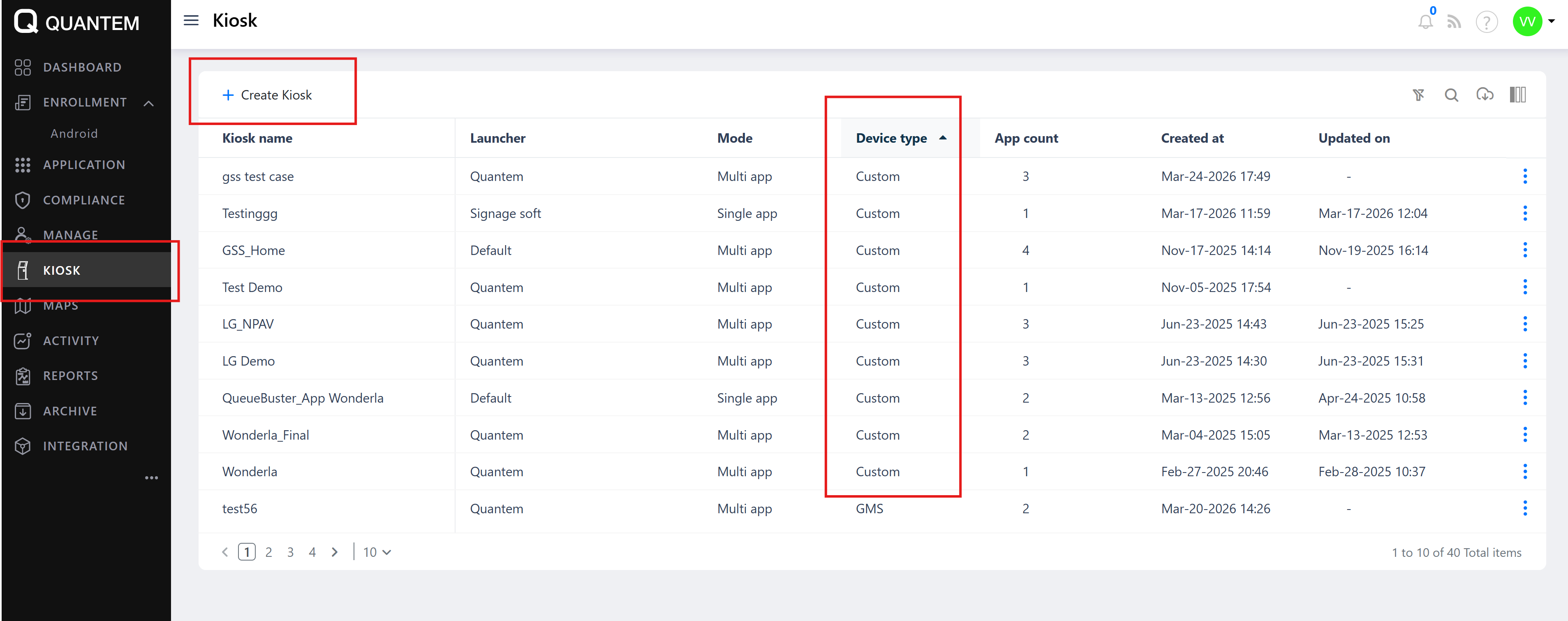
A list of existing kiosks appears in a table view with columns showing:
Kiosk Name
Launcher
Mode (Single App or Multi-App)
Device Type
App Count
Creation Date
Last Updated Date
Creating a New Kiosk for NON-GMS (AOSP) Devices
Click Create kiosk at the top of the Kiosk list.
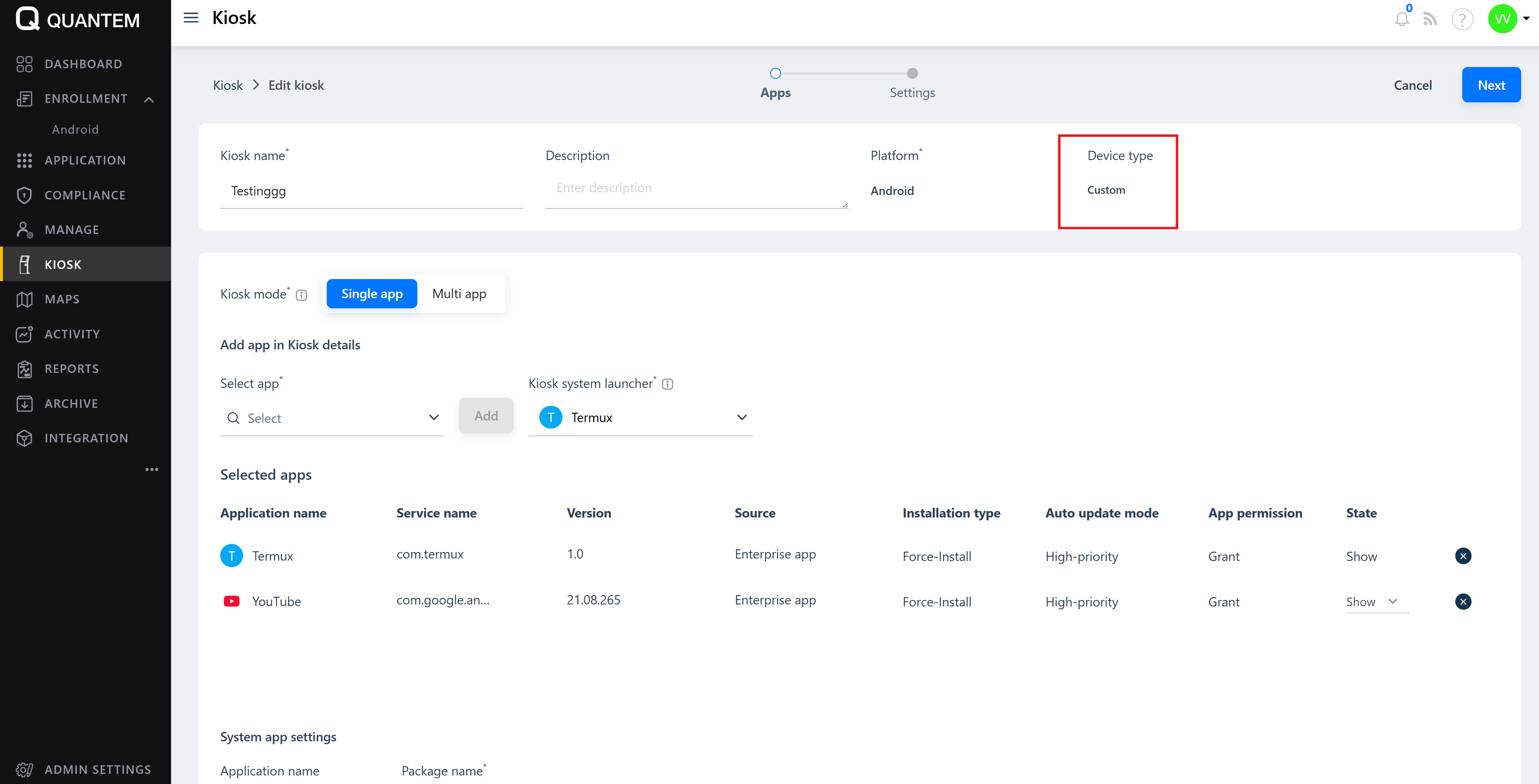
In the Create Kiosk screen, fill in the following details:
Kiosk name (required) – Unique name for the kiosk.
Platform (required) – Select Android
Device Type (required) - Select Custom from the drop down
Description (optional) – Add a short note about the kiosk’s purpose.
Choose the Device Mode:
Single App – Restricts the device to run one app only.
Multi App – Allows multiple apps within the kiosk environment.
Click Select app to choose an enterprise app (previously uploaded). Then click Add to include it in the kiosk.
The selected apps appear in the Selected apps section.
Repeat to add more apps as needed.
For Single App Mode, set which app will act as the kiosk system launcher.
Click Next to configure kiosk settings.
Configuring Kiosk Settings
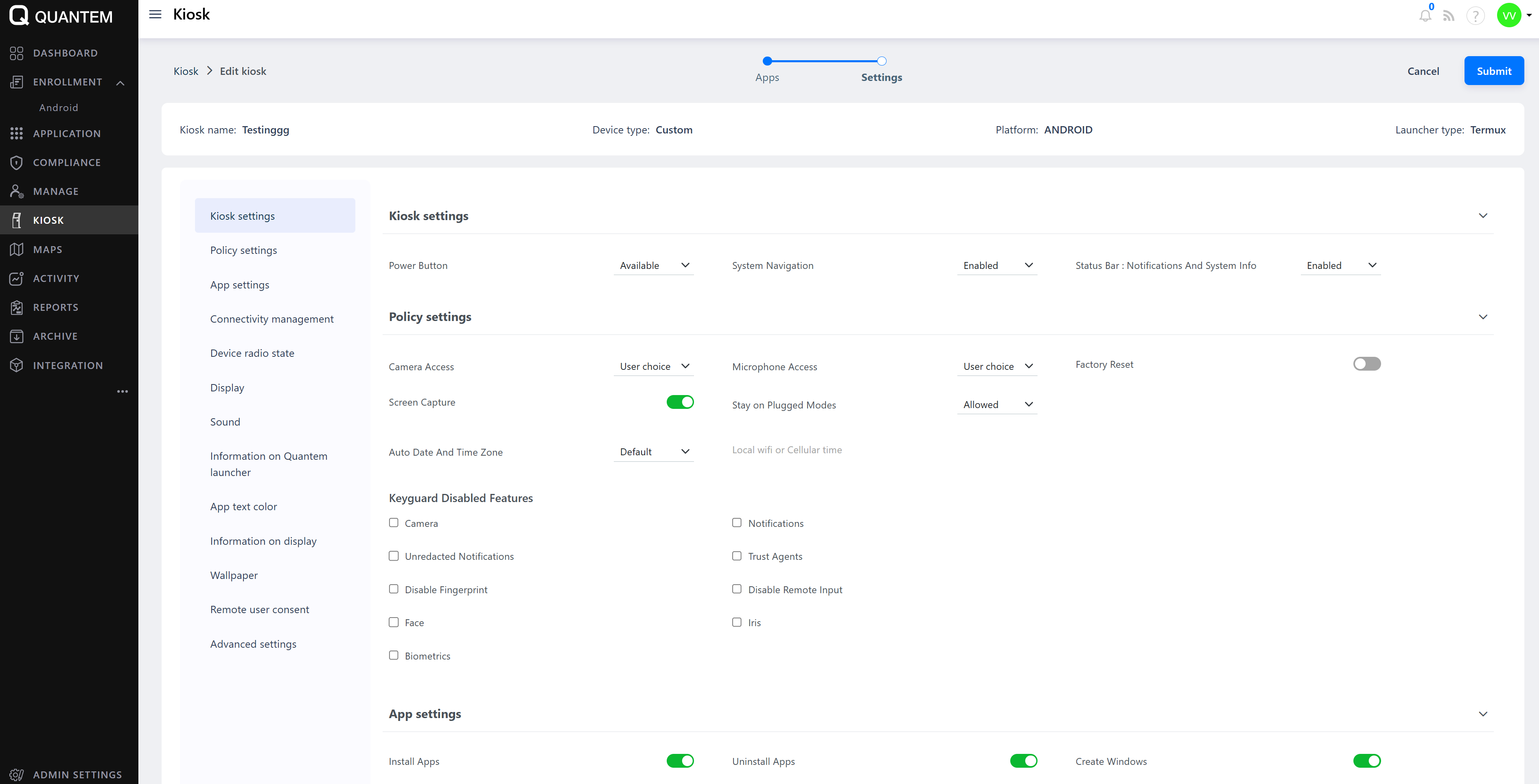
On the settings screen, configure options in the following categories:
Kiosk Settings – Power button behavior, navigation controls, error prompts, status bar visibility, app-level settings, OS update preferences.
Security Settings – Encryption requirements, password policies, device radio controls (Wi-Fi, Bluetooth), and connectivity options.
Policy Settings – Permissions for camera, microphone, factory reset, screen capture, and keyguard behavior.
Display Settings – Screen-on while charging, auto date/time configuration, and brightness control.
Browser Home Screen – Configure default homepage or enable URL filtering (if browser app used).
Sound Settings – Enable or disable sounds (alerts, camera shutter).
After finalizing your preferences, click Submit to save the kiosk configuration.
Viewing and Editing Kiosk Details
In the Kiosk list, click the three vertical dots (⋮) beside the kiosk name.
Select View/Edit details.
The kiosk details screen displays all associated apps and configuration settings.
Modify apps or settings as needed:
Click Next to navigate between configuration steps.
Choose one of the following save options:
Save & exit – Save changes without reassigning groups.
Save & assign – Save updates and proceed to reassign kiosk to groups.
If Save & assign is selected, select the groups to apply changes, then click Assign.
Was this article helpful?
That’s Great!
Thank you for your feedback
Sorry! We couldn't be helpful
Thank you for your feedback
Feedback sent
We appreciate your effort and will try to fix the article